Changes between runs
A list update at 09:47 waits for tonight's batch. So does a change in who owns a company.
Financial crime
Sanctions lists and ownership records change during the day. Calseda screens the customers each change touches as soon as it arrives, and gives the reason for every match. Nobody waits for tonight's run.
What you can't see today
A list update at 09:47 waits for tonight's batch. So does a change in who owns a company.
A sanctioned owner may appear under a different name in a company registry and in your customer records.
An alert that says "possible match" without the evidence sends an analyst back to search by hand.
Screening the whole book takes hours, so it can't run every time something changes.
What you'd see instead
A company is added to a sanctions list.
Customers it owns or controls keep transacting. The screening run is tonight.
The batch flags the customers linked to the company, among thousands of other possible matches.
Analysts start on the matches. Someone asks why the customers were not stopped yesterday.
The list changes. Only the customers it touches are screened again, not the whole book.
Each customer linked to the company is flagged, with the reason: the ownership record that links them to the listed company, and how the names were matched.
The alert reaches the financial crime team's queue, already explained.
An analyst reviews each match with its evidence in front of them, the same morning.
An example with simulated data.
A list change or an ownership change screens again the customers it touches, straight away.
Which list entry matched, and which records linked it to the customer.
Your team's matching rules, or the screening engine you already use, run each time the data changes. Calseda feeds them and keeps the reason with each result.
Matches reach the team's ticketing system or its chat as changes happen through the day.
See it in a demo
In a demo, 20 simulated customers are screened against the US Treasury's SDN list, which is real. When a new edition is published, the customers it touches are screened again. Add a name as if it were listed, and any customer with that name matches at once.
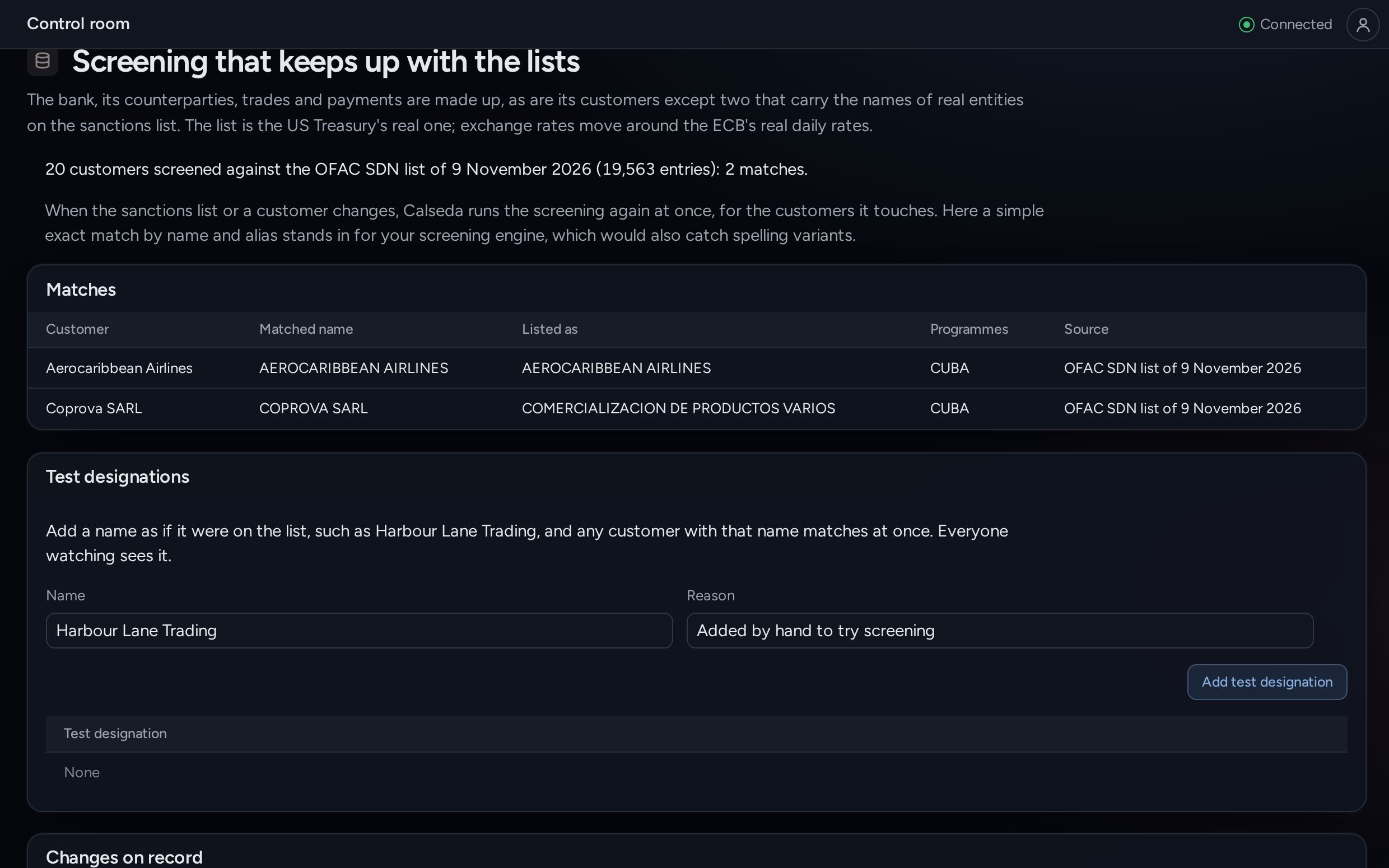
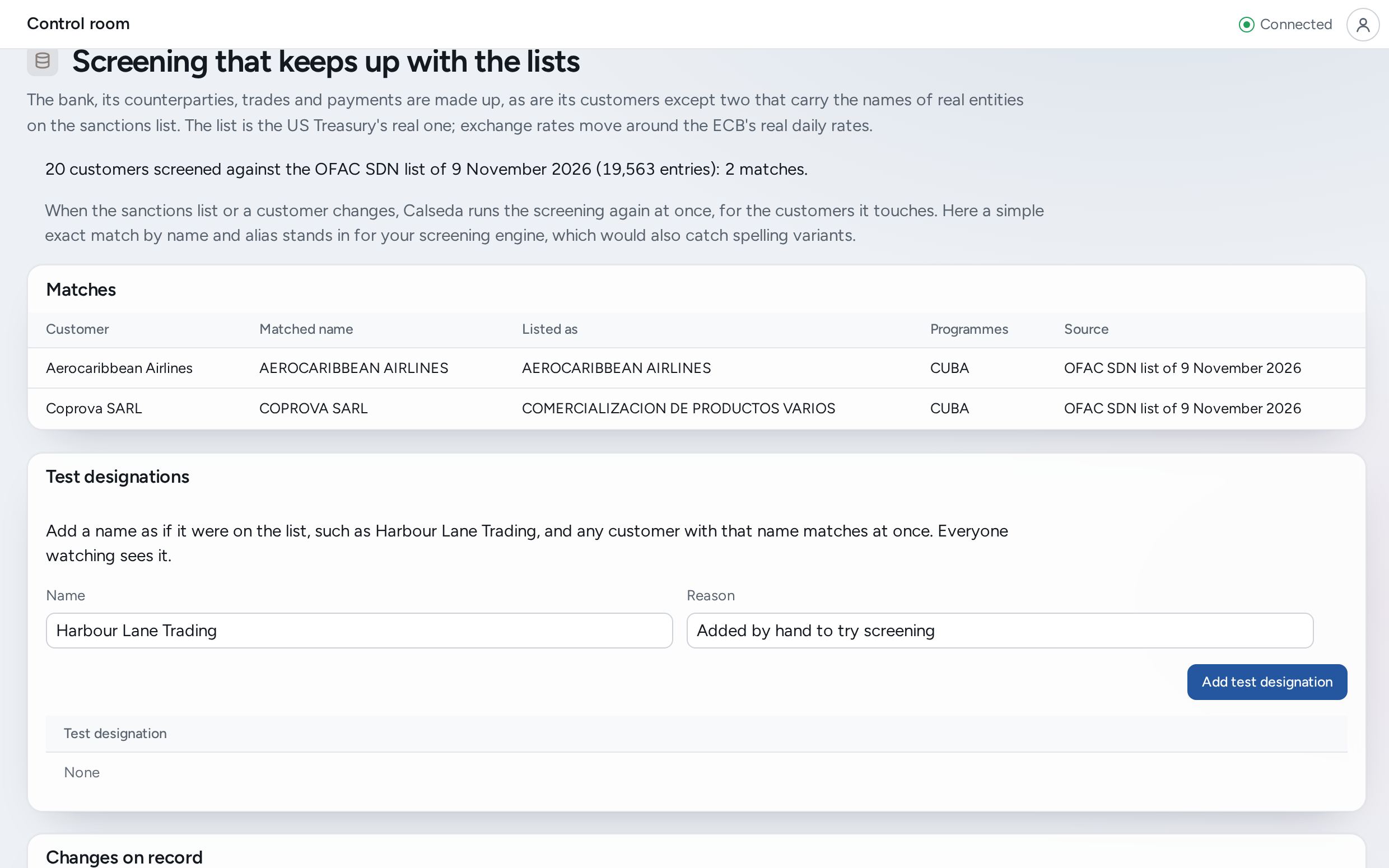
Use it yourself, no sign-in: Screening that keeps up with the lists ↗
In the same demo, public news about ten real companies is read by a language model for a compliance review: News alerts for your watchlist ↗
What changes for your team
Matches arrive as changes happen, instead of in one pile each morning. Each shows why it was raised, so review time goes on judgement, not on searching.
Your team sets thresholds and who is told. Each change is checked, and logged with who posted it.
What your regulator or auditor gets
How it starts
For example, one sanctions list against one customer book.
The list and your customer and ownership records, read from where they already arrive. Nothing is replaced.
Your developers, or ours, write it with your financial crime team. Calseda does the rest.
It runs alongside the overnight screening, so your team can compare the two before relying on it.
Become a design partner: a pilot on generous terms, in exchange for a case study published only with your approval.