Risk at this morning's prices
Value at risk is calculated overnight. By the afternoon it describes a market that has moved.
Trading desks
Prices move every second, and your value at risk moves with them. Calseda keeps each portfolio's valuation and risk current the moment a price changes, and checks a proposed trade against them in private. Every figure shows the prices and rates behind it.
A demo on real public market data. No sign-in.
What you can't see today
Value at risk is calculated overnight. By the afternoon it describes a market that has moved.
A trader checks a new position against the morning's figure, or not at all.
Screens that queue every price fall behind in a sell-off, exactly when a trader needs them.
Traders paste figures into Excel and adjust them by hand. Nobody can trace the changes.
What you'd see instead
The overnight run finishes. A portfolio's value at risk is well inside its limit.
Prices fall sharply. The risk report still shows the morning's figure.
A trader adds to a position, checked against the 07:00 figure. It passes.
The report shows the portfolio over its limit. Risk asks the desk what happened.
Each price change revalues the portfolios that hold it, and only those.
Value at risk moves with the market, and the portfolio shows near its limit.
Before trading, the trader checks the trade privately. It would take the portfolio over its limit.
The trader resizes it, with the same live figures in front of the desk and risk.
An example with simulated data.
Each portfolio revalued when one of its prices or rates changes, and only then.
A proposed trade is tested privately against the live portfolio. Nobody else sees it, and nothing is booked.
When prices move faster than a screen can redraw, Calseda skips the values in between and sends the newest. Nothing builds a backlog.
Traders keep their spreadsheets. The cells hold live figures, and overrides go back through checks, logged with who posted them.
See it in a demo
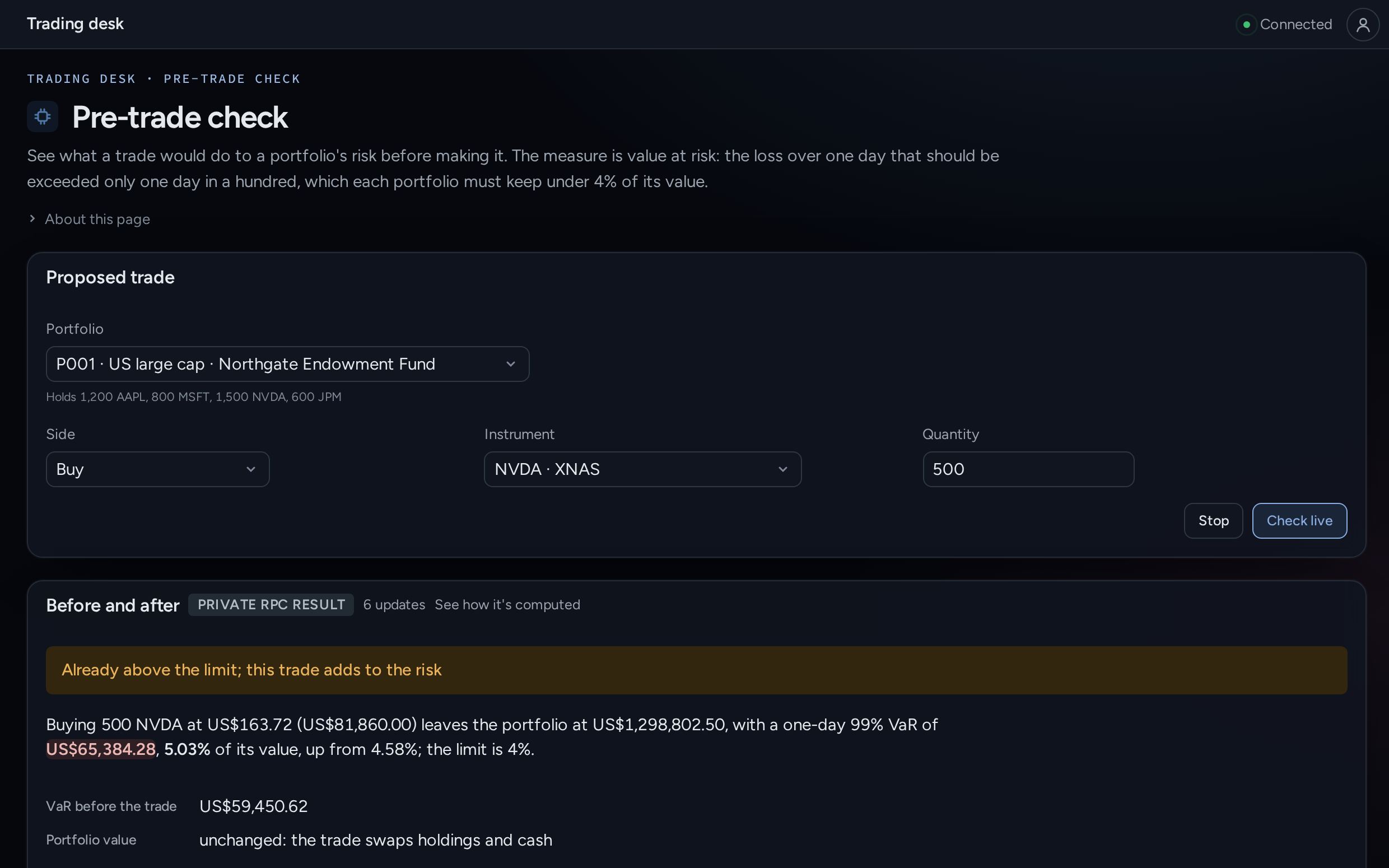
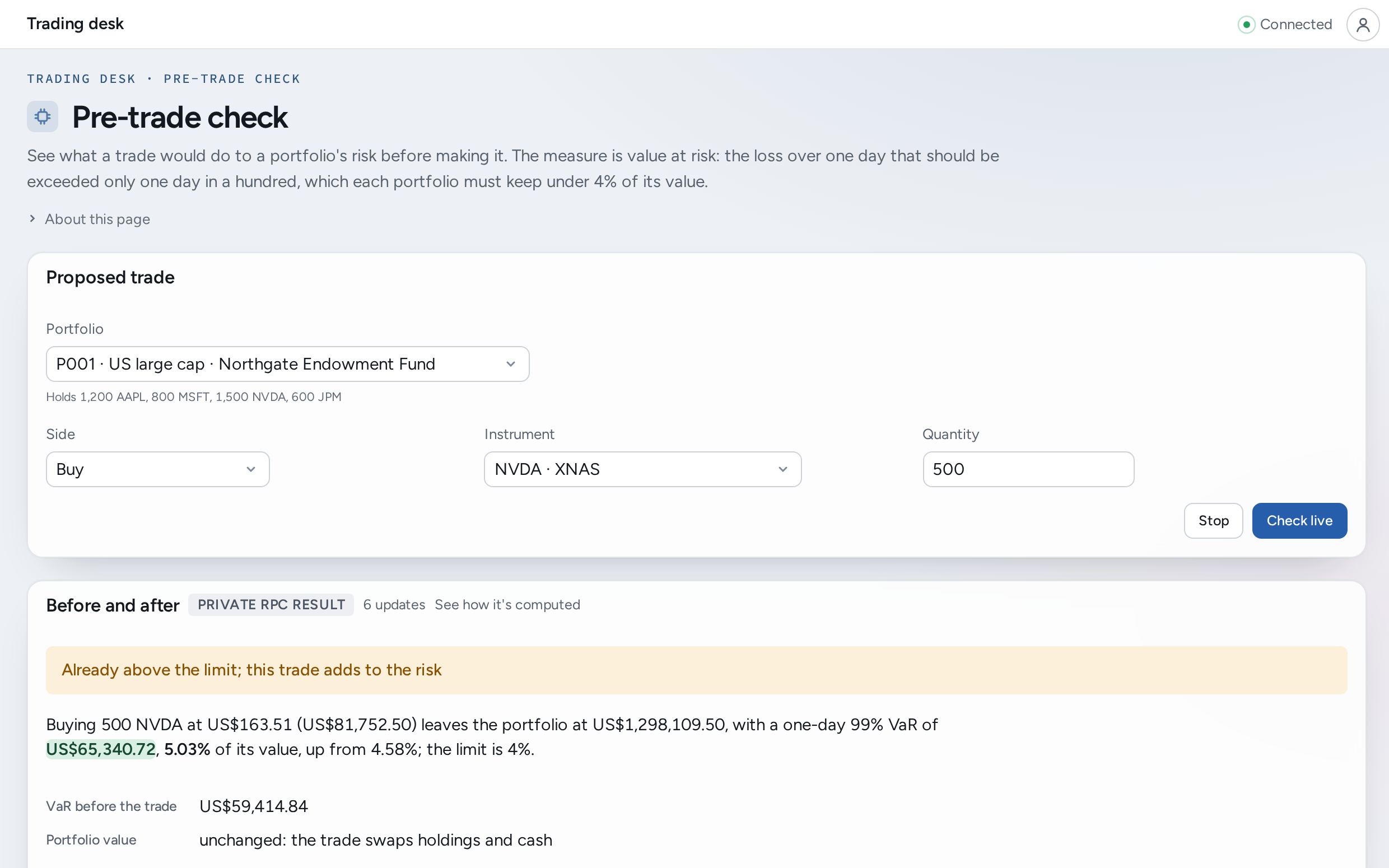
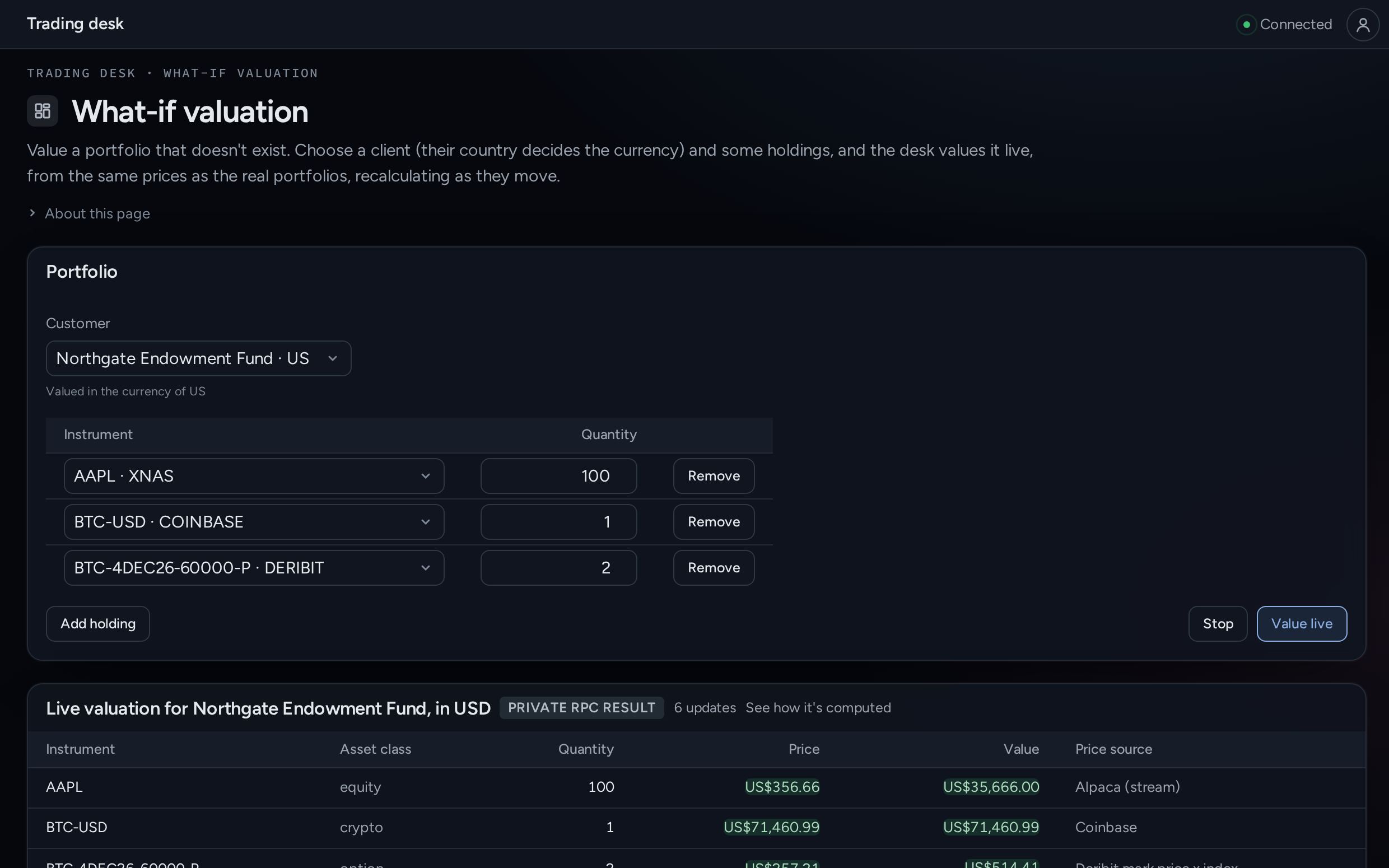
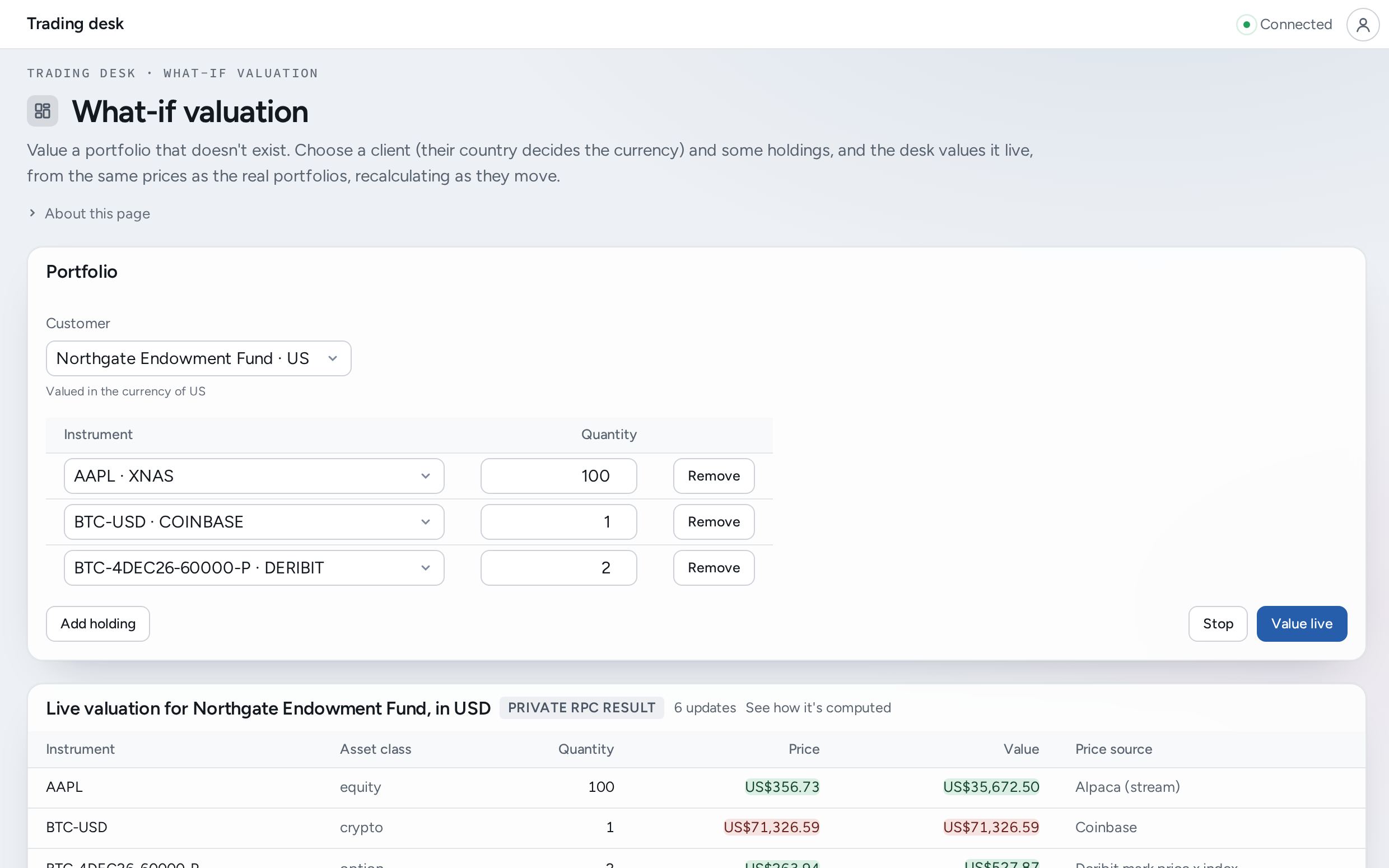
In a demo, a small trading desk values simulated client portfolios, each in its client's own currency, from real public prices of US equities and crypto, bitcoin options included. Each portfolio's value at risk is checked against a limit of 4% of its value. Try a trade before making it, or value a portfolio that doesn't exist.
Use it yourself, no sign-in: Pre-trade check ↗ · What-if valuation ↗
What changes for your desk
A trade that would breach a limit is seen before it is made, while it can still be resized.
“What would this portfolio be worth with half the bitcoin sold?” is a private question on live prices, from a browser or Excel.
What front-office risk gets
For your quants
A model tried from a notebook against live data is a draft: it cannot touch production figures until someone moves it there. The detail is on For technical teams.
How it starts
For example, value at risk for one desk's book.
Positions and market data, read from the systems that already produce them. Nothing is replaced.
Your quants, or ours, write it, in Java or Python. Calseda does the rest.
It runs alongside the overnight run, so the desk and risk can compare the two before relying on it.
Become a design partner: a pilot on generous terms, in exchange for a case study published only with your approval.
For your colleagues: Trading desks, one page (PDF) and the executive briefing, 10 slides (PDF).