The overnight batch
Exposure and positions are recalculated overnight, or every few hours. By mid-morning they describe a day that has moved on.
Live calculations on changing data
Calseda keeps the figures you run on current the moment their data changes: a bank's credit exposure, a power trader's open position, an insurer's exposure to a storm, a bookmaker's liability on a match. Open any figure to see which data produced it and how fresh that data was. It runs alongside the systems you already have.
As a design partner, you pilot one figure that matters to you, in your own environment. The live demos run on public data, with no sign-in.
| Figure | Use of limit | State |
|---|---|---|
| Credit exposureCounterparty A | 42% | Within |
| Storm exposureCoastal property book | 82%91%104% | WithinNearOver limit |
| Open position17:30 half-hour | 61% | Within |
| LiabilityMatch 18, home win | 88% | Near |
Why the storm exposure moved
Teams · Catastrophe exposure alerts
The coastal property book is over its storm limit: 104% at 10:14:02. Causes: the track moved 40 km west, a new hotel policy. Open the figure to see every input.
Where it's used
Calseda fits where an hour-old figure costs money.
| Who | The figure Calseda keeps live |
|---|---|
| Banks: risk and compliance | Each counterparty's exposure against its limit before every deal, intraday liquidity, and customers screened again the moment a sanctions list changes. Live demo ↗ |
| Banks: trading desks | Client portfolios valued from live prices, and every trade checked against its limit before it is made. Live demo ↗ |
| Power trading | The open position and imbalance for each half-hour, so trades and battery use follow the price. Live demo ↗ |
| Insurance | Exposure to a catastrophe while it unfolds, recalculated only for the policies in its path, so reinsurance and claims staff can be arranged early. |
| Sports betting | Liability per market as bets come in and odds move during play, so a large bet is checked against the book as it is now. Live demo ↗ |
Airlines and shipping follow the same pattern: a delay or a change of route ripples into every connection and delivery promise that depends on it.
The 7am figure
Prices, trades, bets, forecasts and schedules change all day. The figures built on them wait for the next batch. Everyone knows it, and everyone works around it.
Exposure and positions are recalculated overnight, or every few hours. By mid-morning they describe a day that has moved on.
To get a fresher view, someone pastes figures into Excel and emails them on. Nobody can say which version is right, or who changed what.
A new question, such as "what if this storm turns west?", becomes a request to IT and an answer weeks later.
When an auditor or a client asks how a figure was produced, a team spends days rebuilding the answer from logs and spreadsheets.
What changes
You keep your figures and your systems.
| Moment | Today | With Calseda |
|---|---|---|
| When figures update | Overnight, or when someone runs the report. | The moment their data changes. Only the figures affected are recalculated. |
| When a limit is crossed | Someone spots it in tomorrow's report. | The team that owns it is told at once, in Teams or Slack, with the causes. |
| Before you commit | Checked against last night's figure. | Checked against the current figure, including everything since the morning. |
| Asking "what if?" | A request to IT, and a wait. | A private question on the live data, from a browser or Excel. Only you see the answer. |
| Spreadsheets | Pasted copies that go stale, and changes nobody can trace. | Live figures in the cells. Changes go back through checks, logged with who posted them and when. |
| When someone asks why | Days of rebuilding from logs and spreadsheets. | Open the figure: the exact values of the inputs behind it, each with its source and how fresh it was. |
| AI assistants | They quote what they find, however old it is. | They read live figures with their sources, and can change only what their own sign-in allows. |
See it live
Each live demo runs on public data, with no sign-in, on the same Calseda software you would run yourself.
For heads of risk, compliance, financial crime, treasury and controls. A simulated bank's limits and customer screening, watched all day, with every figure open to its inputs. The US sanctions list is real; everything about the bank is simulated, and exchange rates move around the ECB's real daily rates.
Open the risk and compliance demo ↗
For banks: Credit risk · Financial crime · Liquidity and collateral · Regulatory data · Limits and controls
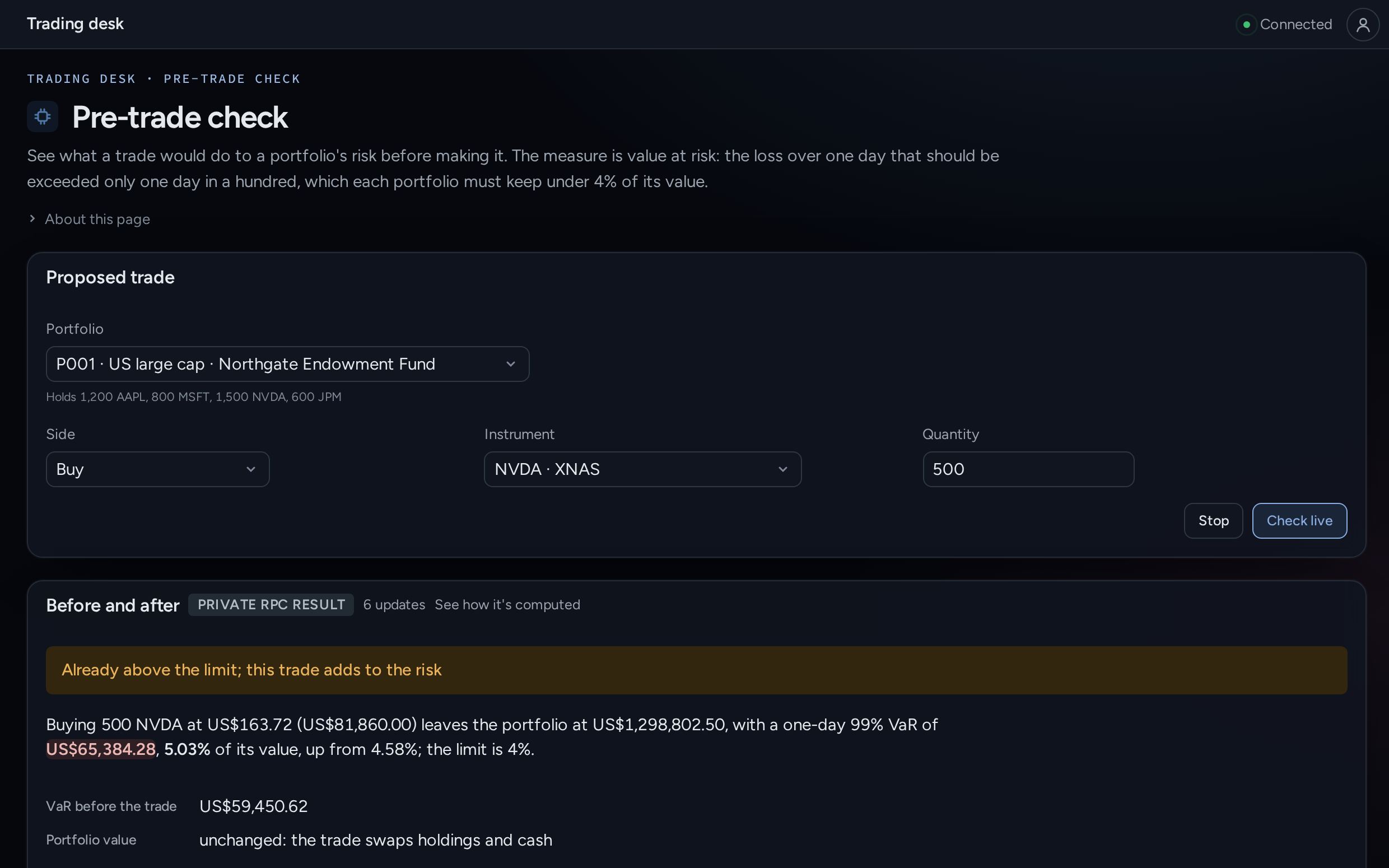
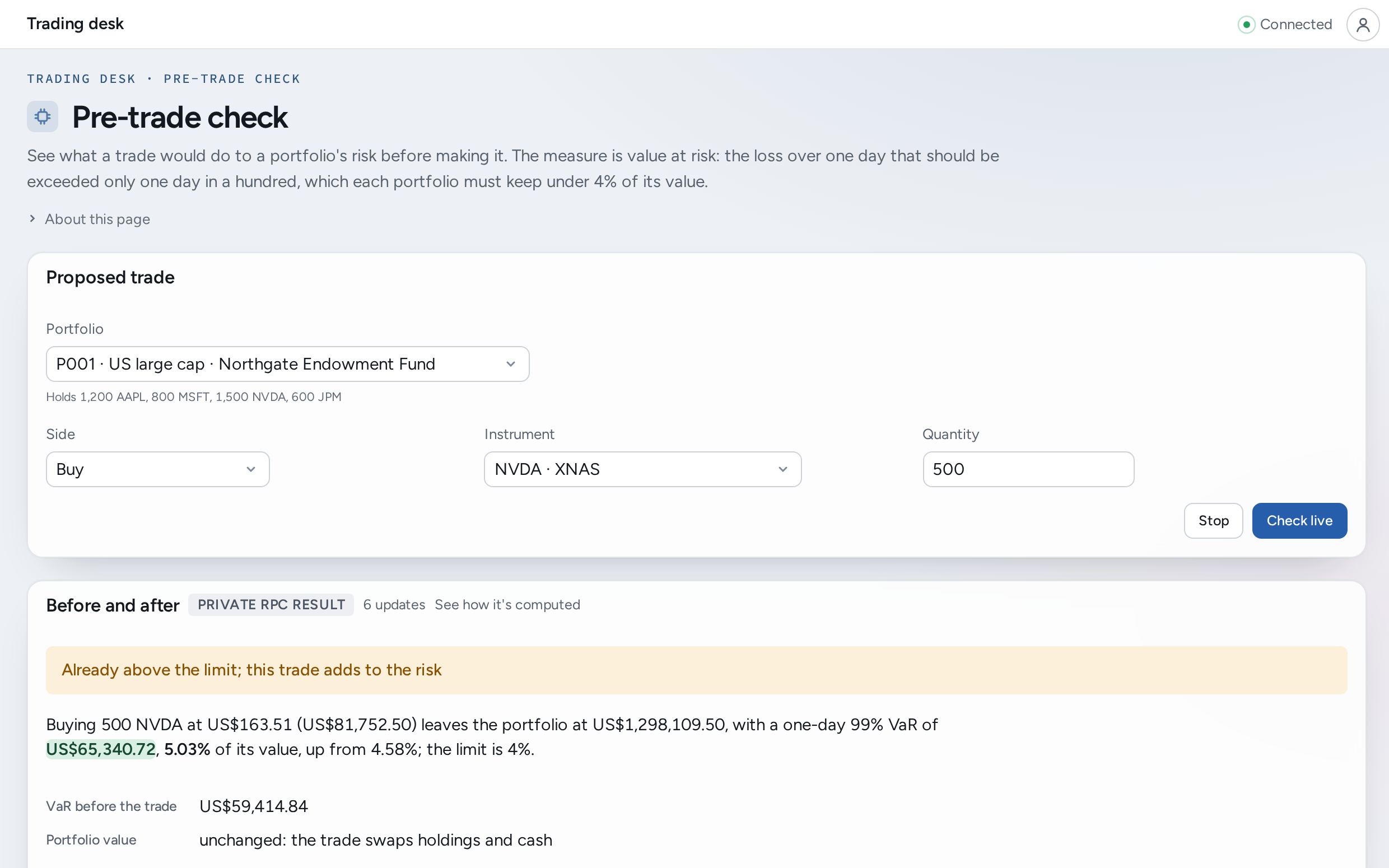
For a bank's trading desks and the risk team beside them. Client portfolios valued live from real public prices of US equities and crypto, and any trade checked before it is made. The clients' portfolios and their limit are simulated, and second-by-second exchange rates move around the ECB's real reference rates.
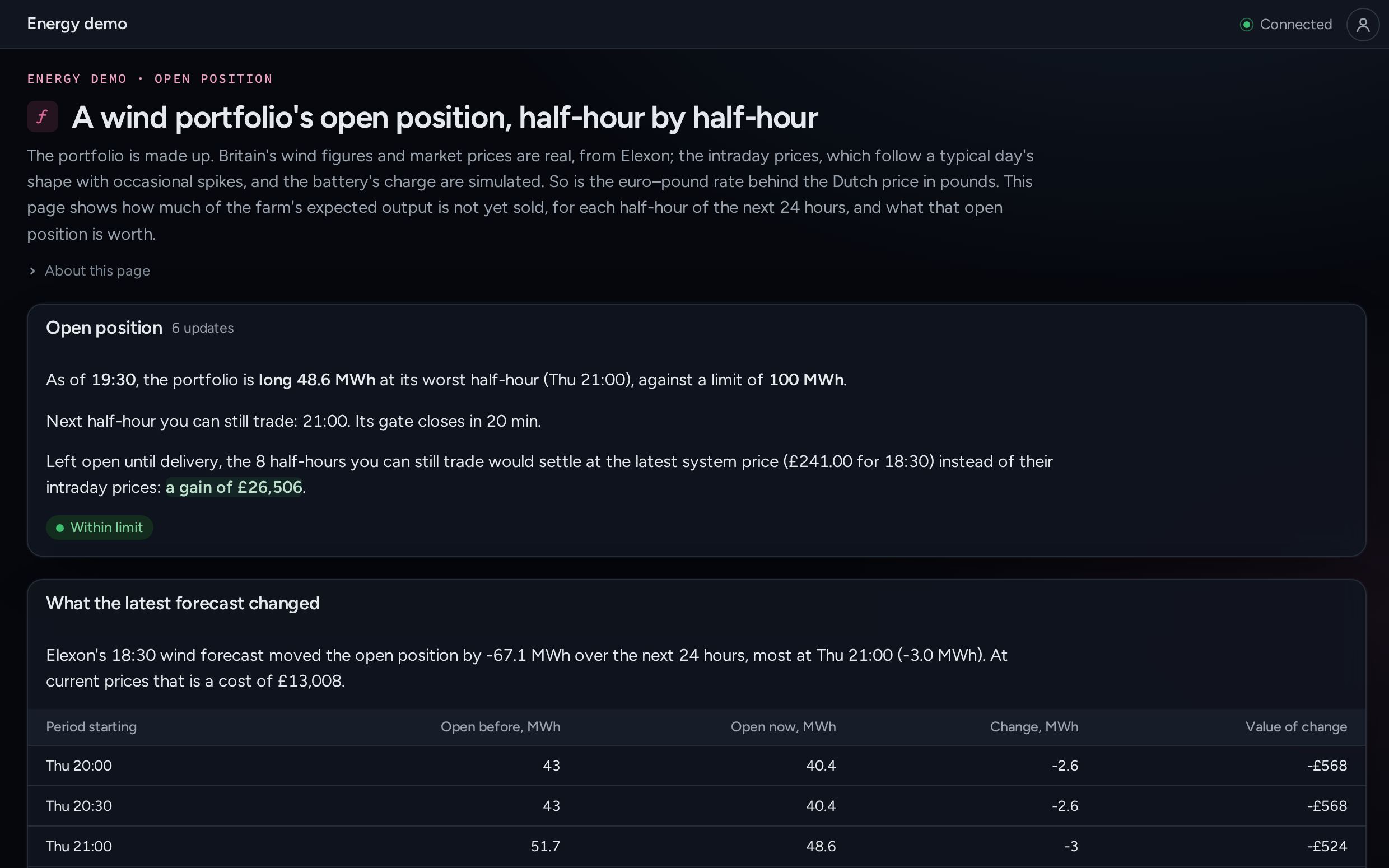
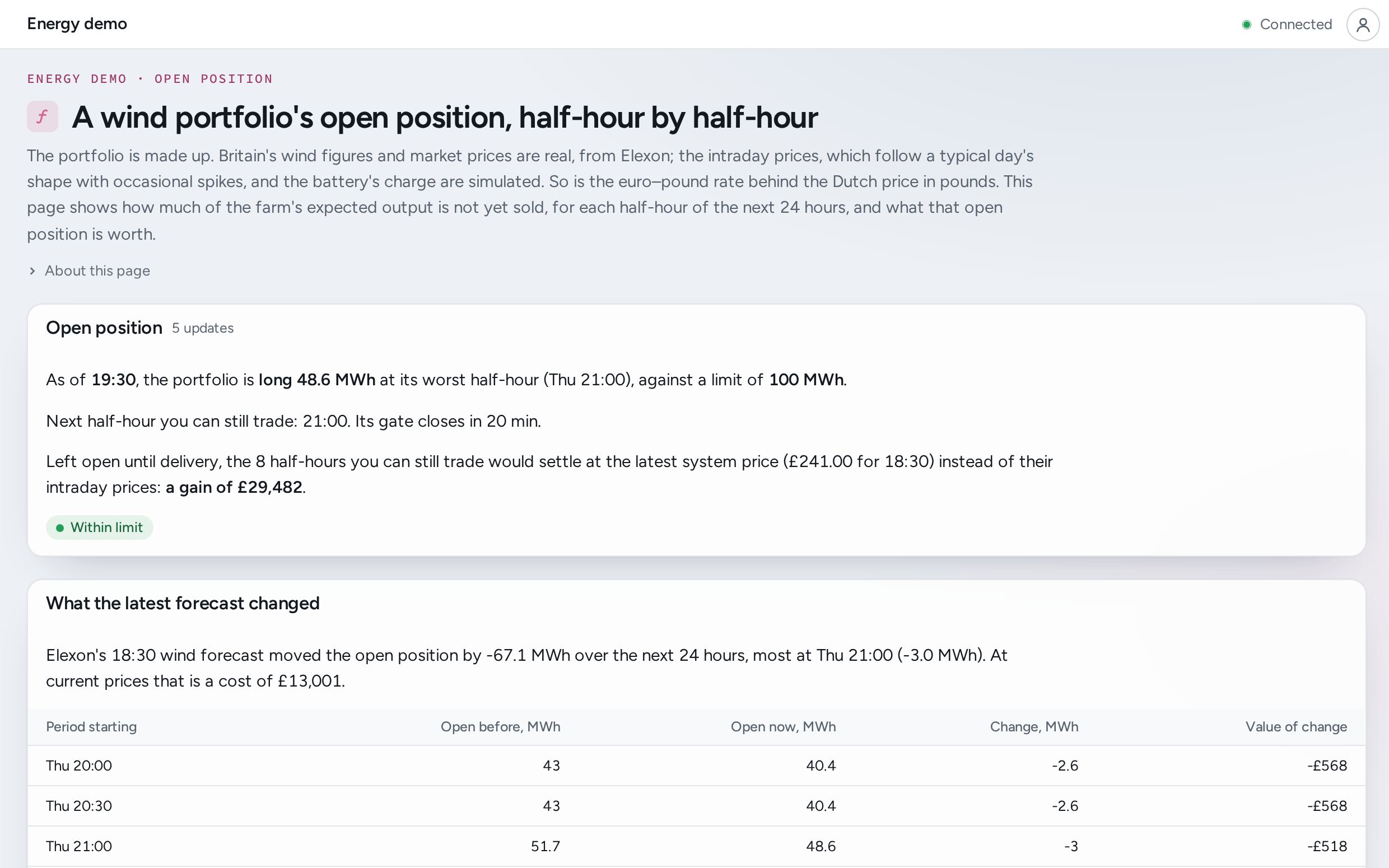
For a short-term power trading desk. A simulated 400 MW wind farm's open position for every half-hour of the next 24, from Britain's real wind figures and market prices, published by Elexon. The intraday prices and the battery's charge are simulated.
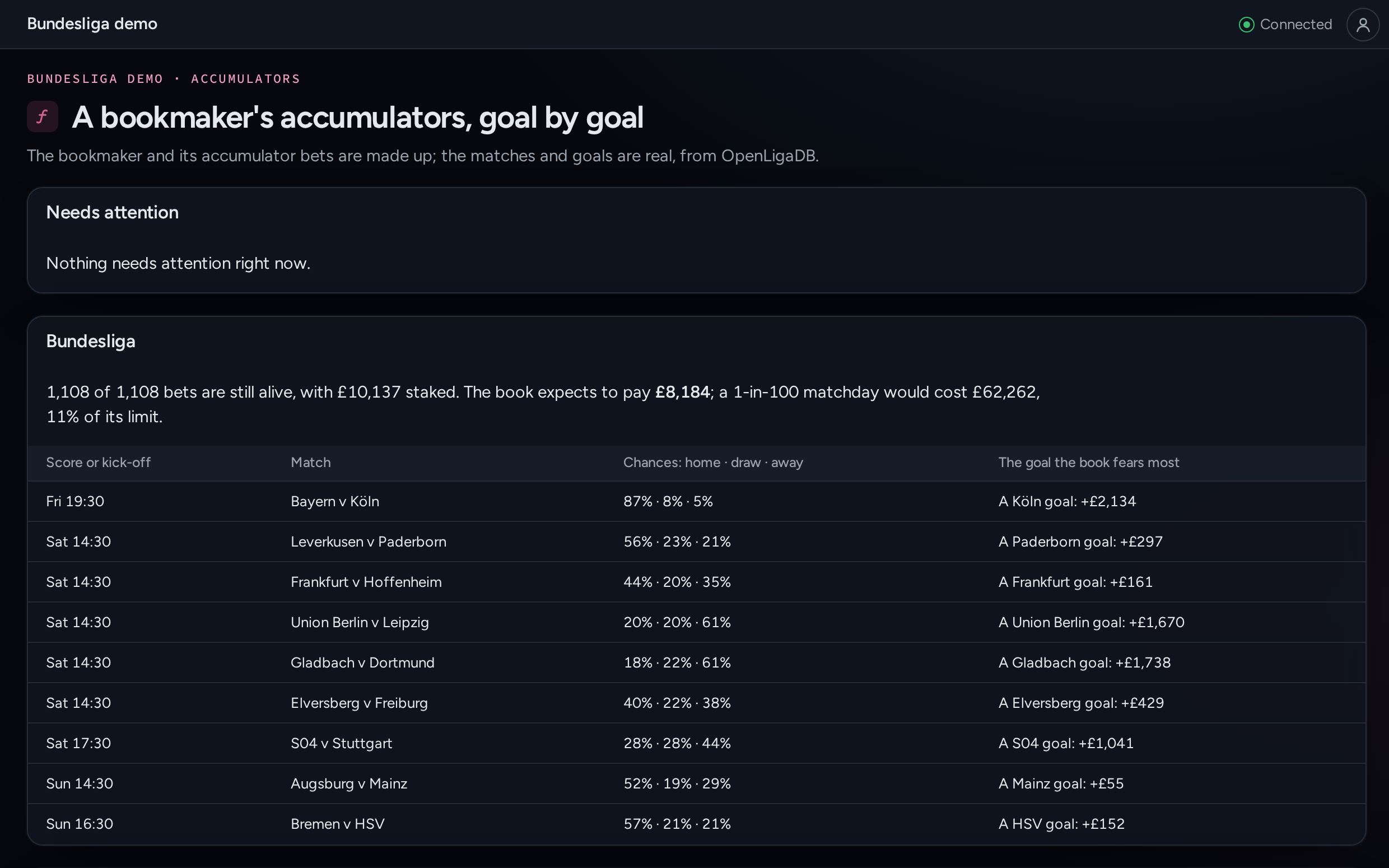
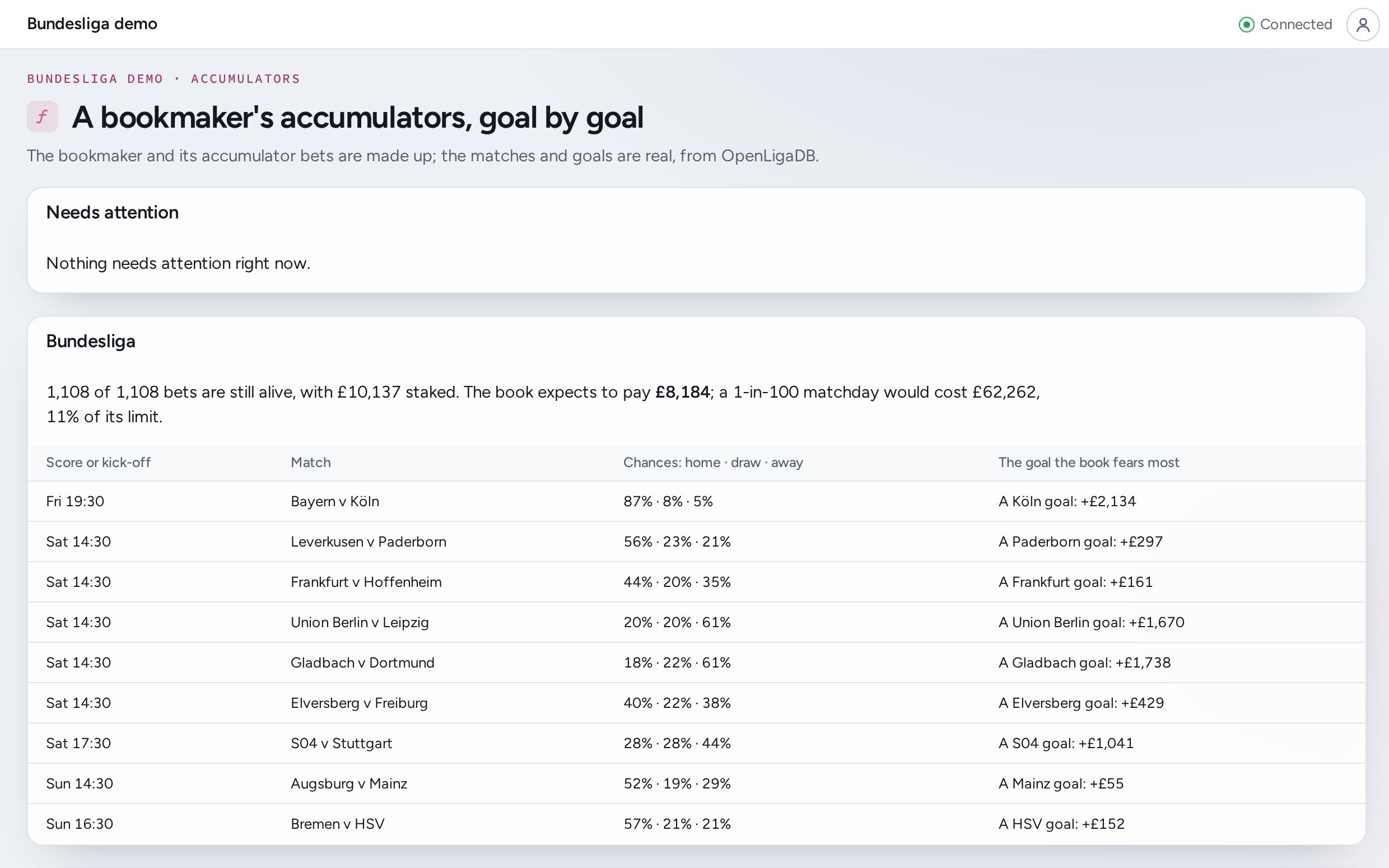
For a bookmaker's trading and risk team. The real 1. and 2. Bundesliga, with live scores and results from OpenLigaDB, and a simulated bookmaker with its accumulator bets. The book's exposure follows every goal in every match.
For banks
An example from banking
How it lands
There is no new core system and no migration. You keep what you have, and start with one figure.
It reads the data your systems already produce: message streams, files, databases and the services they already offer. It replaces none of them.
It runs on your own infrastructure, in your data centre or your cloud. Your data stays where it is.
People sign in with the identity provider you already use, and its roles decide who may do what. Every change anyone posts is logged with who posted it and when.
A pilot starts with one figure that is late or hard to explain today. Your developers, or ours, write the calculation, and Calseda does the rest. It can be live in weeks.
Each calculation is small and kept apart from the plumbing, so your team can review and change it quickly. A new question doesn't need a new system.
Calseda is not a ledger or a payment system. Where every single event must be processed exactly once, keep the systems built for that.
The direction of travel
Citi describes its in-house XiNG platform as giving "a live, precise assessment of risk and P&L"[1], and the Options Clearing Corporation has turned an overnight margin batch of more than eight hours into a five-minute intraday run[2].
You don't have to build it yourself. Calseda runs your own calculations live, on your own data.
For your colleagues
We are looking for a few organisations to shape Calseda with us. You get a pilot built around one figure that matters to you. In return, we write up what we did together as a case study, published only with your approval.
Your technical colleagues will want the detail: For technical teams.